The Postal Service Analogy
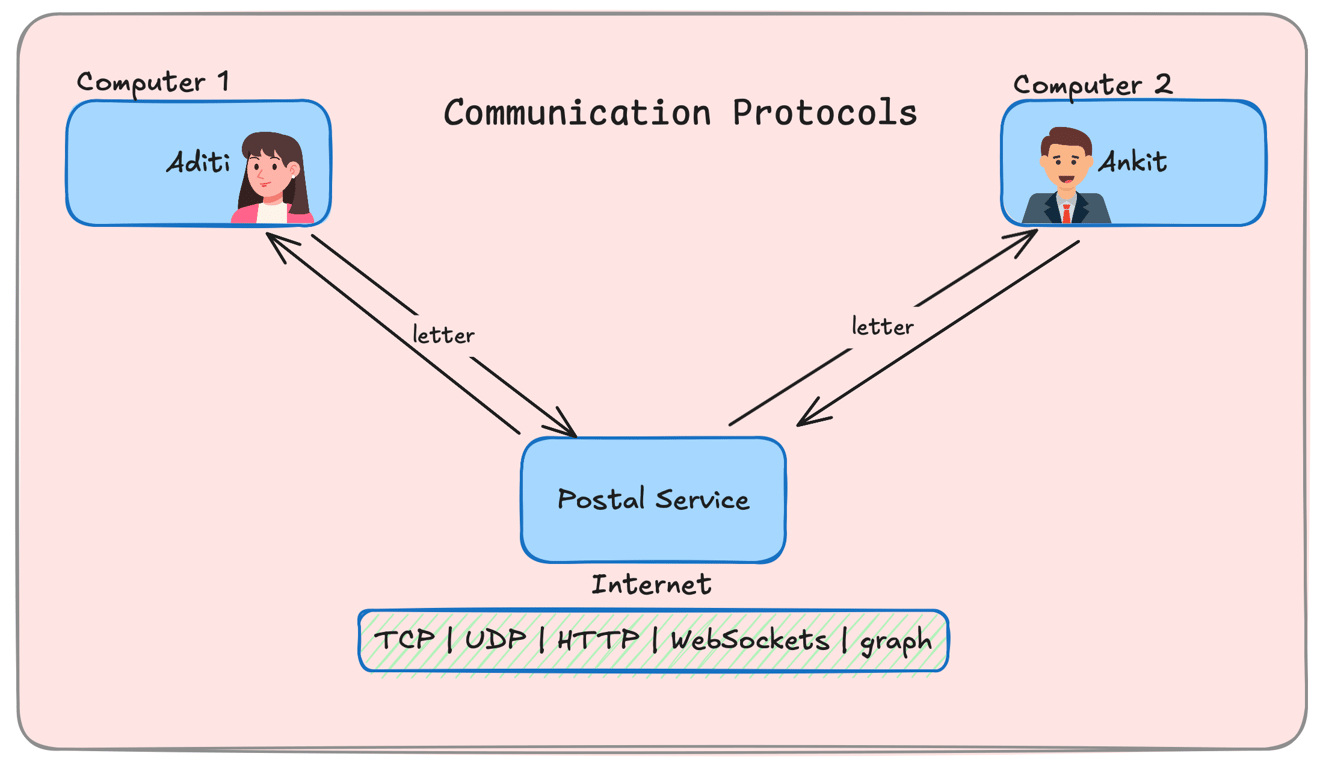
Imagine two friends, Ankit and Aditi, living in different cities. They want to exchange letters.
Ankit writes a letter and sends it via the postal service. If he wants a guaranteed delivery, he chooses a tracked service. If speed is his priority, he picks an express delivery. Each method has its pros and cons.
This is exactly how computers communicate over the internet using different protocols. Some prioritize reliability (like TCP), while others focus on speed (like UDP). Some handle real-time updates (like WebSockets), while others work best for structured requests (like HTTP and gRPC).
What Are Communication Protocols?
Protocols are rules that define how data is transmitted between devices over a network.
They ensure messages are delivered correctly, securely, and efficiently. Just like a postal service needs a system to deliver mail, the internet needs protocols to send data.
Let’s explore five key protocols: TCP, UDP, HTTP, WebSockets, and gRPC.
{diagram showing different protocols and their key characteristics}
1. TCP (Transmission Control Protocol)
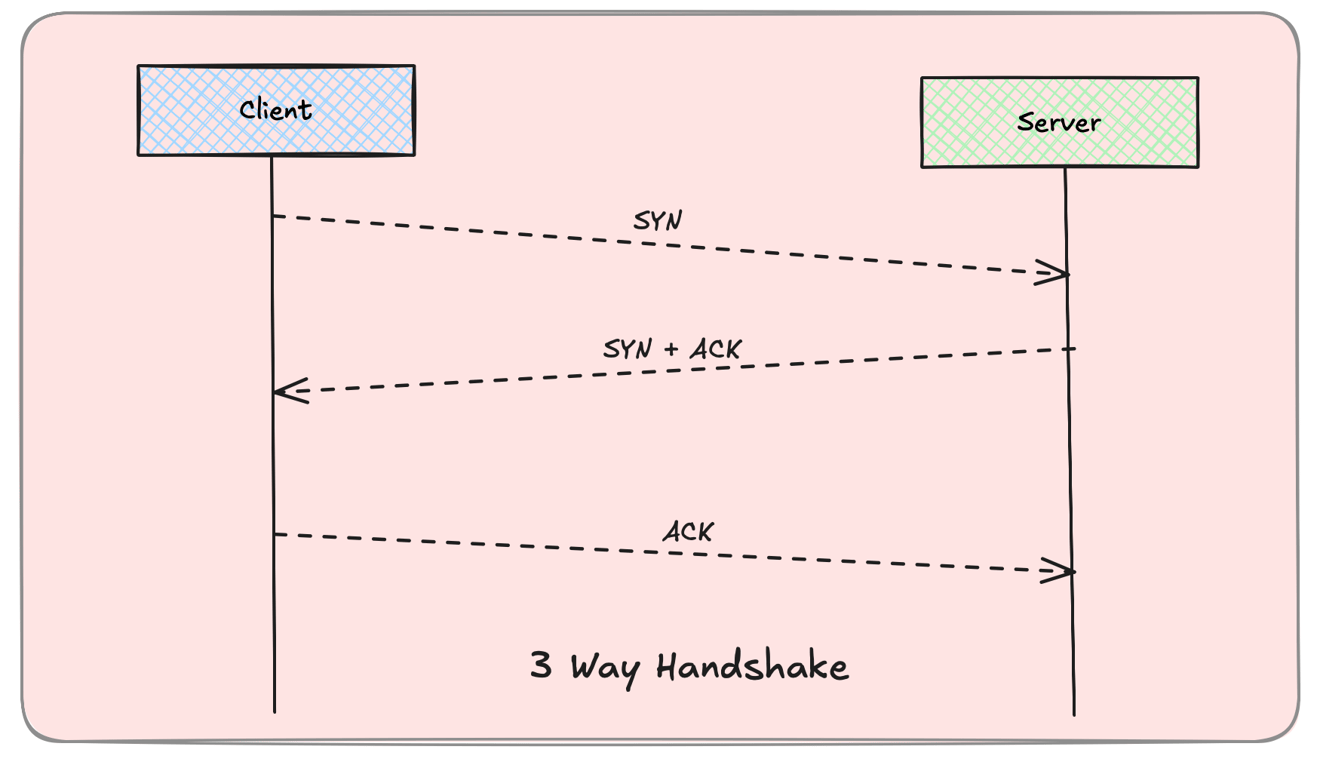
TCP is like sending a registered letter. The sender ensures the message arrives, and the recipient confirms receipt.
How TCP Works
Connection Setup – The sender and receiver establish a connection (handshake).
Data Transmission – Data is split into packets and sent sequentially.
Acknowledgment – The receiver confirms receipt of each packet.
Error Handling – If a packet is lost, TCP retransmits it.
TCP Use Cases
Web browsing
File transfers (FTP)
Email communication (SMTP)
2. UDP (User Datagram Protocol)
UDP is like sending a postcard—fast, but no guarantee it will arrive or in what order.
How UDP Works
No connection is established before sending data.
Packets are sent without waiting for acknowledgment.
If a packet is lost, there is no automatic retransmission.
UDP Use Cases
Online gaming
Video streaming
Voice over IP (VoIP)
3. HTTP (Hypertext Transfer Protocol)
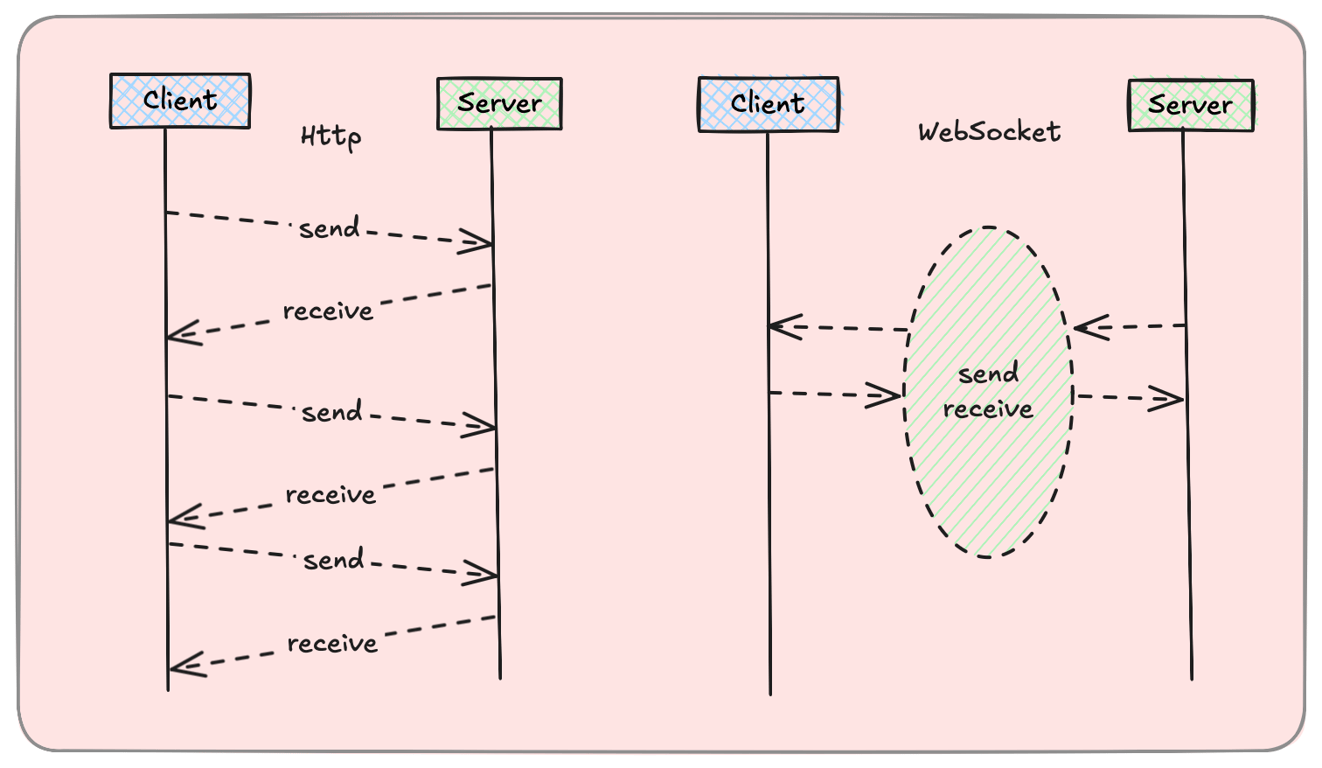
HTTP is like ordering food from a restaurant. You place an order (request), and the restaurant (server) responds with food (data).
How HTTP Works
A client (browser) sends a request.
The server processes the request and sends a response.
Responses contain status codes (200 OK, 404 Not Found, etc.).
HTTP Use Cases
Websites (loading pages, fetching images, etc.)
APIs for web applications
4. WebSockets – Real-Time Communication
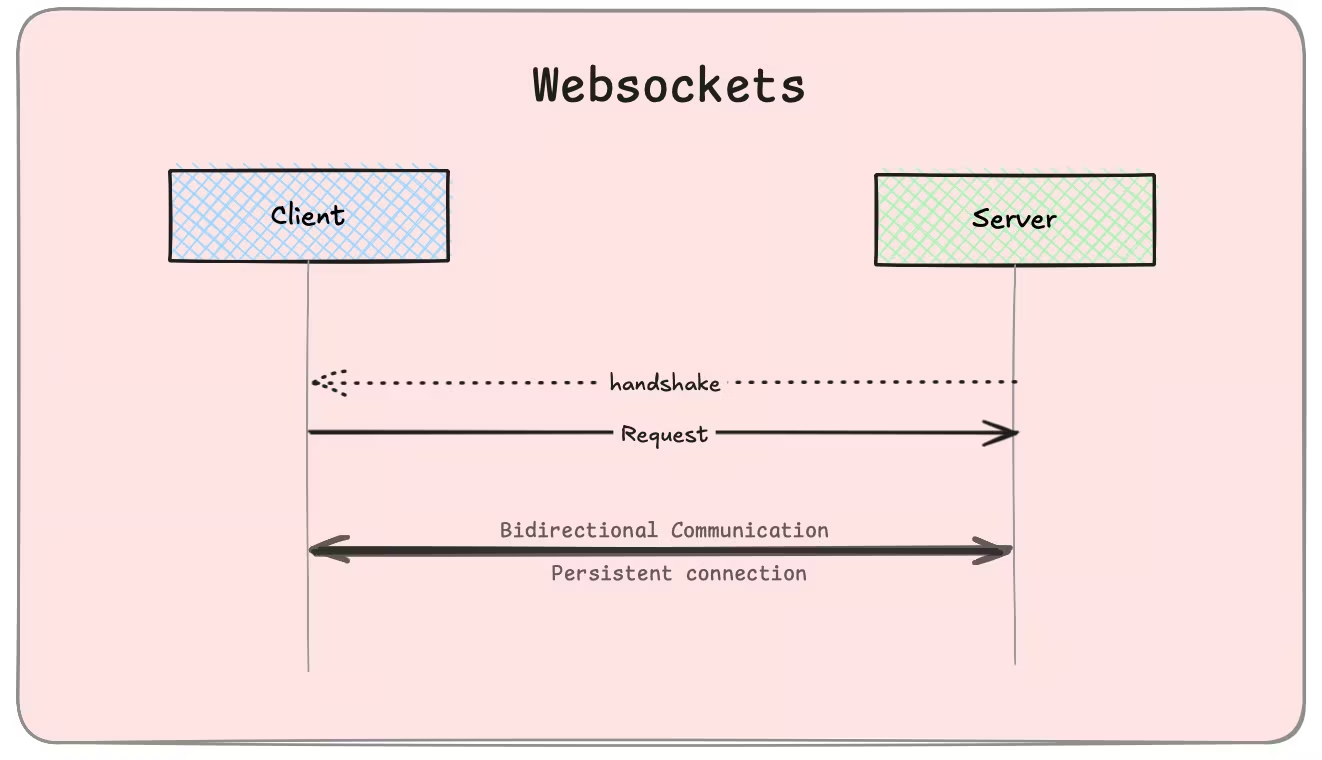
WebSockets are like a phone call—once connected, both parties can speak freely without re-establishing a connection.
How WebSockets Work
The client and server establish a persistent connection.
Data flows in both directions without needing a new request.
The connection remains open until one party disconnects.
WebSockets Use Cases
Live chat applications
Stock price updates
Online gaming
5. gRPC – High-Performance API Communication
gRPC is like a structured business meeting—each person follows a clear format when speaking.
How gRPC Works
Uses Protocol Buffers (Protobuf) instead of JSON.
Supports bi-directional streaming.
Optimized for speed and efficiency.
gRPC Use Cases
Microservices communication
High-performance APIs
Streaming data applications
Choosing the Right Protocol
Each protocol has its own strengths. Choosing the right one depends on the use case.
Protocol
Best For
Example Applications
TCP
Reliable data transfer
Web browsing, file sharing
UDP
Fast but unreliable data
Gaming, video calls
HTTP
Structured web requests
Websites, REST APIs
WebSockets
Real-time updates
Chat apps, live dashboards
gRPC
Efficient microservices
Internal system APIs
Conclusion
Communication protocols form the backbone of the internet. Whether you’re building a chat app, a website, or a gaming platform, choosing the right protocol is crucial.
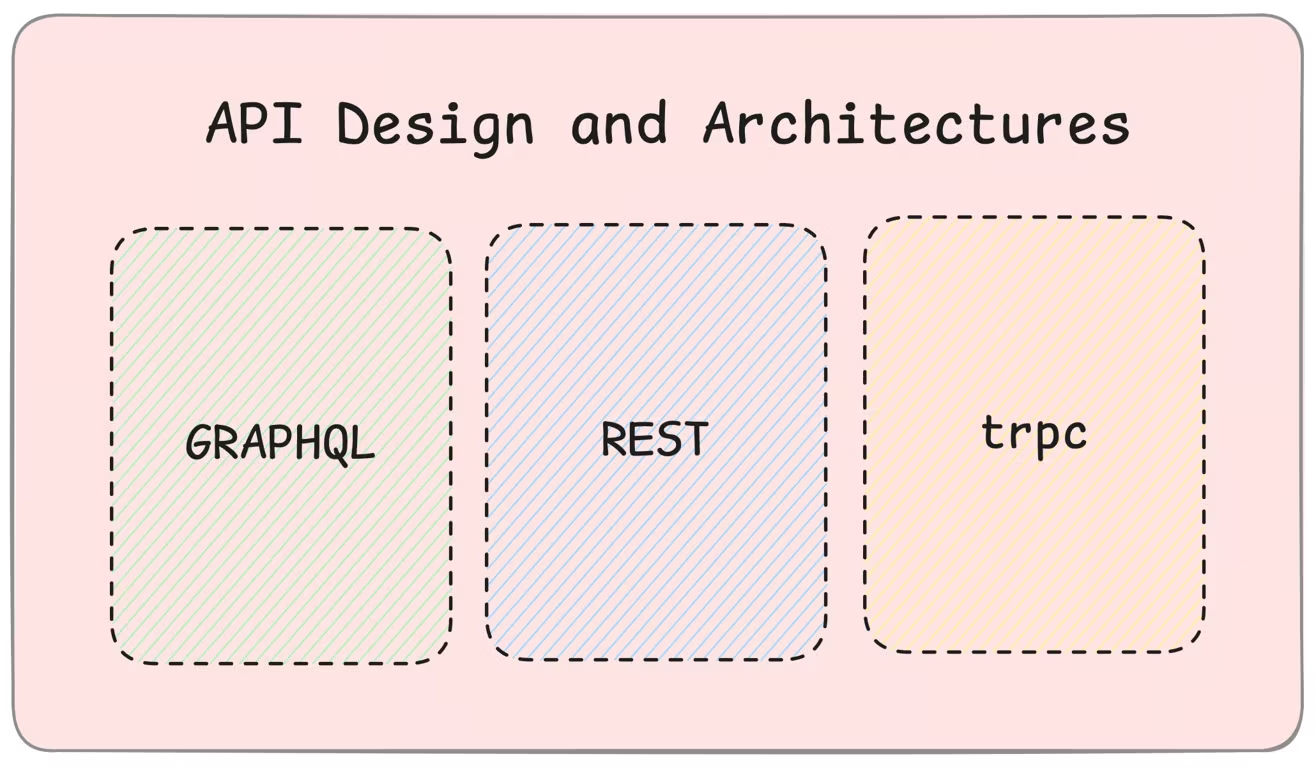
In the next article, we’ll explore API Design & Architectures, covering REST, GraphQL, tRPC, and OpenAPI.