The Frustration of Delayed Updates
Emma was using a stock trading app, expecting real-time price updates. But instead, she had to refresh the page repeatedly.
The problem? The app relied on traditional HTTP requests instead of real-time communication.
The solution? WebSockets and Server-Sent Events (SSE), enabling instant, two-way updates between clients and servers.
What is Real-Time Communication?
Real-time communication allows data to be transmitted instantly between clients and servers without waiting for manual refreshes.
Example: Chat applications, live dashboards, stock price updates, online gaming.
Challenges:
Reducing latency for instant updates.
Handling high concurrency with thousands of users.
Ensuring efficient data flow without overloading servers.
WebSockets – Persistent Two-Way Communication
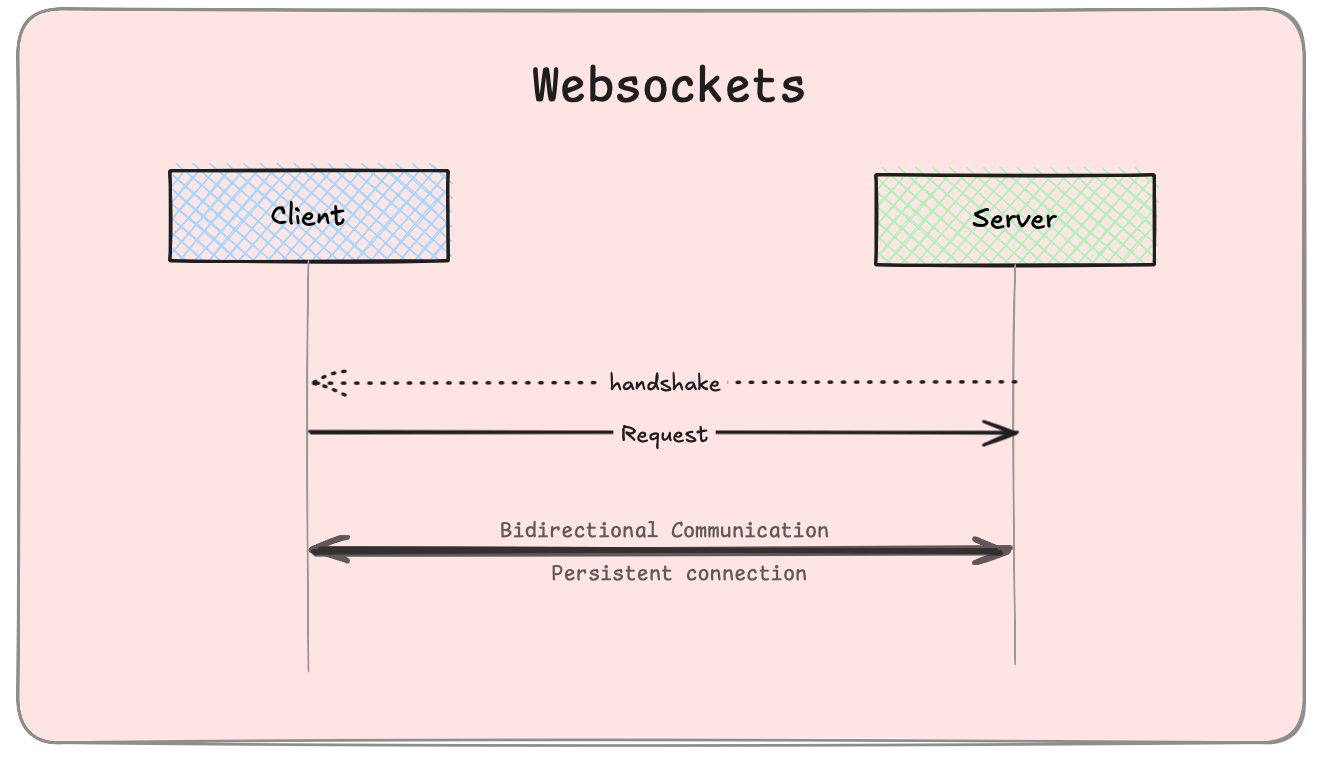
WebSockets provide a full-duplex, bidirectional communication channel between a client and a server over a single connection.
How It Works:
Client initiates a WebSocket handshake.
Server accepts and keeps the connection open.
Data flows in both directions in real time.
Example: A multiplayer game synchronizing player positions.
Why Use WebSockets?
The question arises is, why do we want use web sockets? reason can be one of this:
✔ Low Latency: Messages are sent instantly. ✔ Persistent Connection: No need to reopen connections for every request. ✔ Efficient Bandwidth Usage: No unnecessary HTTP request overhead.
Socket.io – WebSockets Made Easy
Socket.io is a popular JavaScript library for real-time communication using WebSockets.
Key Features:
Works even if WebSockets aren’t supported (falls back to long polling).
Supports rooms and namespaces for organizing messages.
Provides automatic reconnection in case of failures.
Example:
const io = require('socket.io')(server);
io.on('connection', (socket) => {
  console.log('User connected');
  socket.emit('message', 'Welcome to real-time updates!');
});
Use Case: WhatsApp uses WebSockets to deliver messages instantly.
Server-Sent Events (SSE) – One-Way Streaming
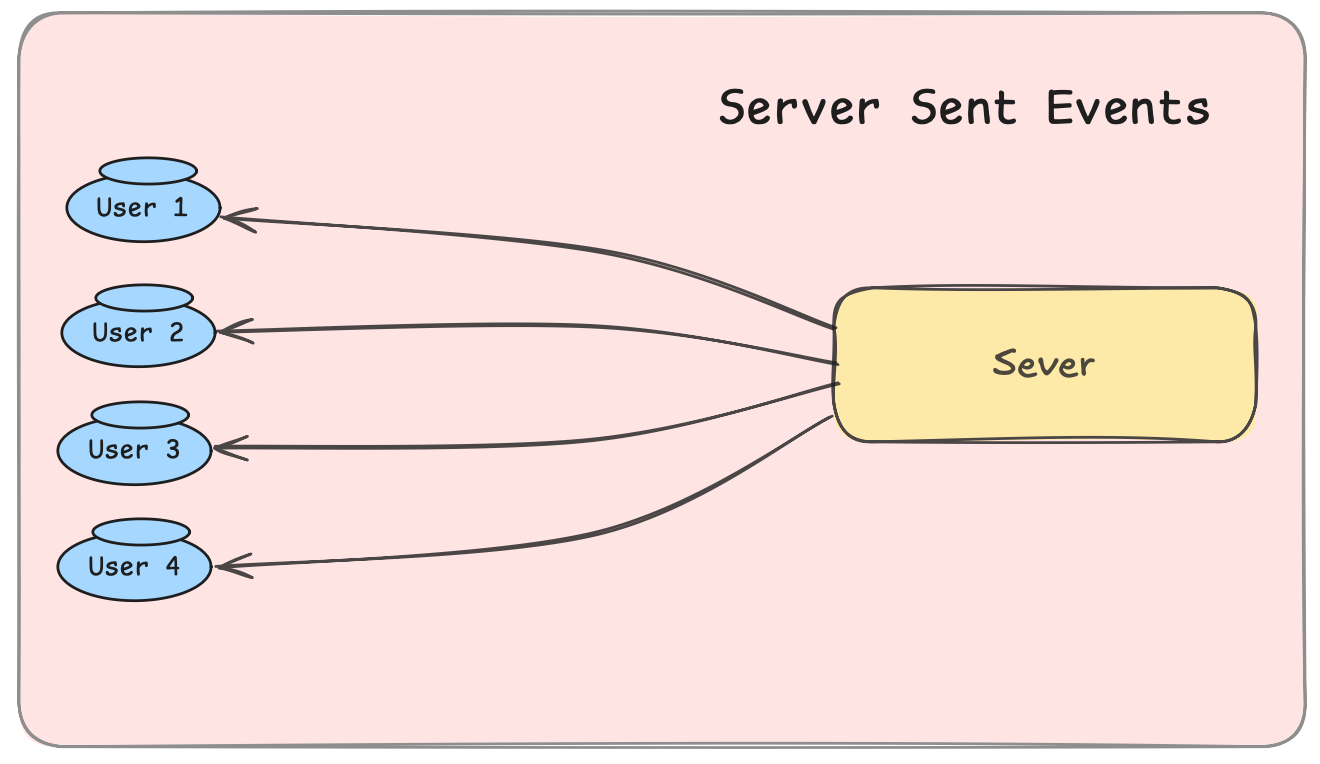
SSE is a unidirectional communication method where the server sends updates to the client over a single connection.
How It Works:
Client sends an HTTP request.
Server keeps the connection open.
Data is streamed to the client whenever updates occur.
Example: A news website pushing live headlines.
Why Use SSE?
The same part arises in here, why to use SSE...because they are:
✔ Simple and lightweight (uses plain HTTP). ✔ Automatic reconnection if the connection is lost. ✔ Ideal for real-time dashboards, notifications, and live updates.
Example:
res.setHeader('Content-Type', 'text/event-stream');
res.write('data: Live stock price: $250\n\n');
WebSockets vs. SSE – Choosing the Right Technology
Feature
WebSockets
SSE
Direction
Two-way
One-way
Connection
Persistent
Persistent
Scalability
More complex
Easier to scale
Best For
Chats, gaming, live collaboration
News feeds, stock updates
Real-World Use Cases
1. Chat Applications (WhatsApp, Slack)
WebSockets power real-time messaging.
Socket.io ensures seamless reconnections.
2. Live Sports Scores & Stock Updates
SSE streams instant score updates.
WebSockets enable interactive features like polls.
3. Online Multiplayer Games
WebSockets sync player positions and actions instantly.
Low-latency connections enhance gaming experience.
Conclusion
Real-time communication transforms user experiences by enabling instant updates.
WebSockets (Socket.io) handle bidirectional, low-latency interactions.
SSE provides simple, server-to-client updates for live feeds.
Choosing the right technology depends on scalability, directionality, and data flow needs.
Next, we’ll explore API Gateway & Reverse Proxy – Nginx, Traefik, Envoy.